
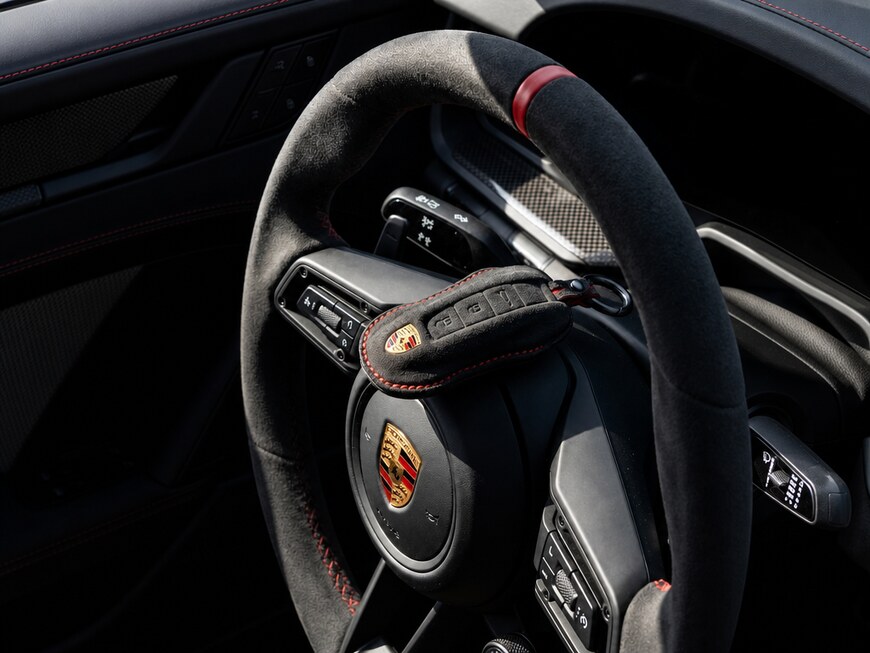

If you wander around the paddock at any UK track day, from Castle Combe to Oulton Park, you’ll notice a massive trend in cockpit design. Leather steering wheels are out. Matte, dark, velvety synthetic suede is in.
The material has become the universal shorthand for motorsport intent. Developed in the 1970s, this composite of polyester and polyurethane has transitioned from racing circuits to become a staple of premium production interiors. In fact, the material made its debut in 1974 on the Bertone designed Lamborghini Bravo concept car, before finding its first production application on the legendary Lancia Stratos HF.
But why do performance focused drivers appreciate this texture so much? While steering wheel grip under high stress driving is the obvious benefit, many enthusiasts are now extending this tactile experience to the objects they carry in their pockets. After all, your physical connection to a performance car begins the moment you pick up the key, long before you climb into the bucket seat.
Friction Dynamics on the Limit
When you are pushing a car on a circuit, every detail matters. Your hands read the feedback through the steering wheel, and you want zero slip. But when you step away from the car, that need for physical consistency remains. If your hands spend the morning wrapped around a high grip M Performance steering wheel, pulling a cheap, scratched plastic key fob out of your pocket when you park up feels like a missed opportunity. It breaks the visual and physical loop that makes owning a performance car so satisfying.
This has led to a growing market for bespoke key sleeves that mirror factory specifications. Track day regulars frequently choose to carry that distinctive, high grip motorsport texture with them outside the car. This subtle accessory ensures that the key fob matches the premium, performance oriented aesthetic of the cabin, transforming a standard piece of plastic into something that feels custom made.
There is also a highly practical side to protecting a key with synthetic suede, particularly in a track environment. Fobs are frequently dropped on concrete pit lanes, tossed into hard gloveboxes alongside tyre pressure gauges, or left sliding around in cup holders. A bare plastic housing will quickly become chipped, gouged, and worn. A protective microfibre sleeve acts as a shock absorber, cushioning the fob against impacts and preventing the casing from splitting.
Weight Reduction and Impact Protection
Many owners turn to cheap silicone cases as a quick fix, but these present their own issues. Silicone is a magnet for pocket lint, dust, and hair, quickly making the key look cheap and greasy. It also adds a sticky texture that makes the key difficult to slide out of tight pockets. Traditional leather, on the other hand, can become slick when exposed to sweat or moisture, and can wear unevenly at the corners over time.
Synthetic suede avoids these pitfalls. Its surface is composed of millions of ultra fine microfibers that create a microscopic, interlocking nap. This texture resists water splashes, handles daily friction without peeling, and remains completely free of the sticky residue that plagues rubber cases.
These properties are highly valued by race teams and premium car manufacturers. Alcantara is surprisingly lightweight – typically around 50% lighter than natural top grain leather which is why track focused cars like the Porsche GT3 RS use it extensively to shave cabin mass.
For those running Stuttgart’s finest GT products, opting for tailored accessories for Porsche owners provides a subtle way to shield the fob from damage while keeping the vehicle’s lightweight, performance focused aesthetic completely intact. These sleeves are tailored to fit the iconic car shaped fobs, protecting the painted side cheeks from scratching without adding unnecessary bulk to your pocket.
Maintaining this material is straightforward, which is crucial for items handled daily. Because our hands carry natural skin oils, any microfibre accessory will absorb these lipids over time. This can cause the fibers to flatten out and look matted. A simple monthly wipe with a damp microfiber cloth is usually enough to lift any transferred oils and restore the original velvety texture.
The appeal of synthetic suede lies in its ability to combine genuine utility with a premium look. By protecting your key with a material matched sleeve, you ensure that the tactile experience of your performance car is preserved, from the moment you lock up in the paddock to the moment you toss the key on your desk at home.